Biblical Womanhood vs Embodied Womanhood: How High-Control Religion Disconnects Women From Themselves
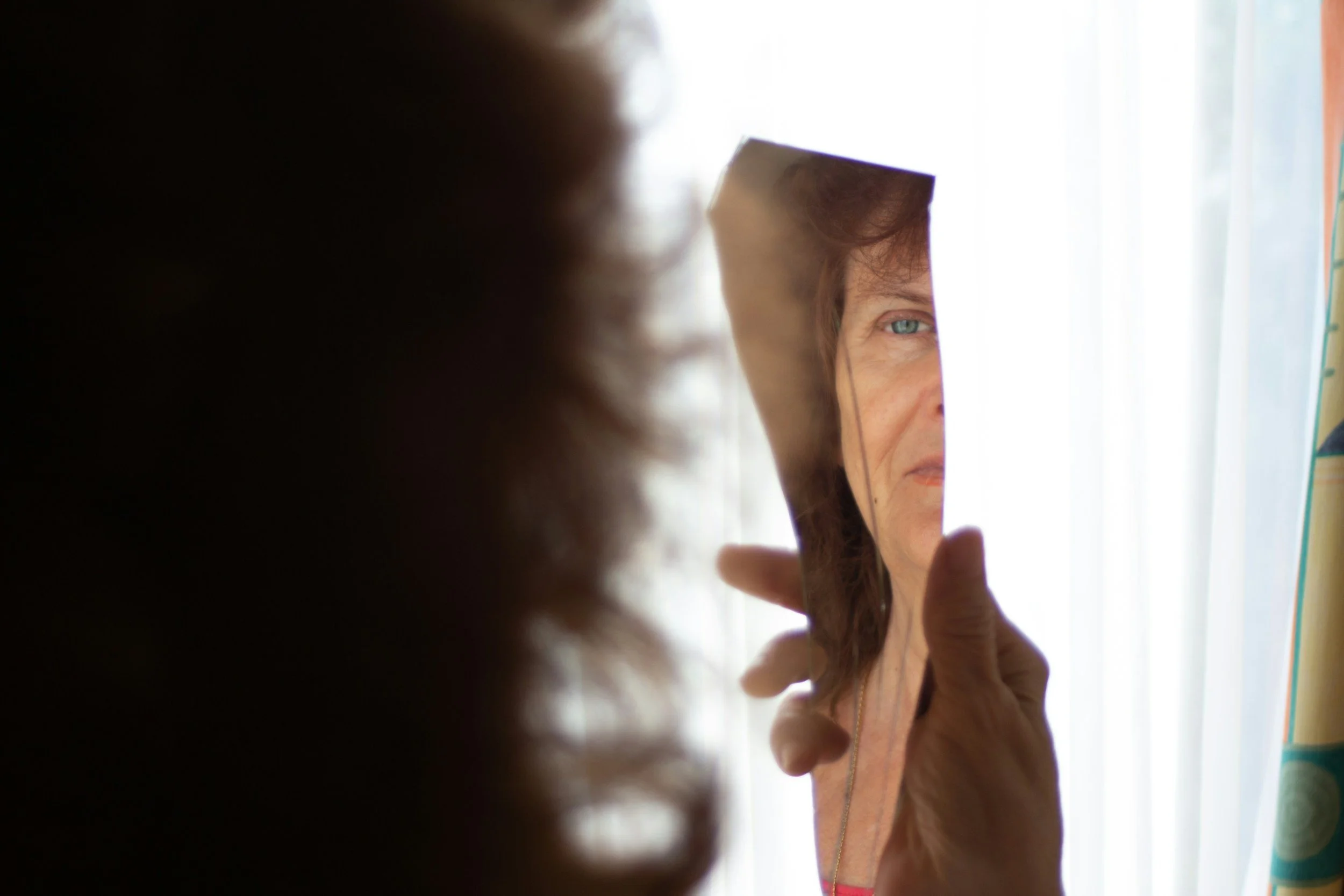
I’ve worked with many women recovering from religious trauma and high-control religion who can tell me exactly what everyone else needs or wants… but completely freeze when I ask them a much simpler question:
“What do you want?”
Not what your spouse wants.
Not what your church taught you to want.
Not what would make you look “godly.”
Not what would make everyone else comfortable.
You.
The paralysis many religious trauma survivors — particularly women — feel around this question makes perfect sense.
Because many people raised in high-control religion were never actually taught how to know themselves. They were taught how to monitor themselves. Control themselves. Suppress themselves. Perform goodness. Stay agreeable. Stay humble. Stay “safe.” Stay useful.
For many women, “biblical womanhood” was not presented as one possible interpretation of femininity. It was presented as the ONLY approved and acceptable way to be female.
And if you questioned it or pushed back? You may have been labeled disobedient, selfish, deceived, defiant, prideful, worldly… or my personal favorite: “living in sin.”
To be clear, not all Christians interpret scripture this way. Many people of faith reject rigid gender hierarchies and harmful teachings around submission, purity culture, and control. But within high-control religious systems, “biblical womanhood” is often taught as the only acceptable path to becoming a “good” woman.
Over time, many women lose connection with themselves in the process.
What “Biblical Womanhood” Often Teaches Women
While teachings vary across denominations and churches, many survivors of religious trauma recognize common themes in what they were taught about being a “godly woman.”
Submission to Male Authority
Women are taught that men are designed by God to lead, while women are designed to submit and follow.
This can show up in marriages, churches, dating relationships, and family systems. Men are often positioned as spiritual authorities, while women are expected to be supportive, yielding, agreeable, and deferential.
The underlying message becomes:
Your authority is external, not internal.
You learn to look outside yourself for permission, guidance, validation, and decision-making. Over time, many women stop trusting their own instincts altogether.
I cannot tell you how many women I’ve worked with who feel physically anxious making even small decisions without guidance or reassurance from someone else first — because they were conditioned to believe that trusting themselves was inherently wrong and could lead to separation from God.
Identity Becomes Role-Based
In many high-control religious environments, womanhood becomes deeply tied to roles:
wife, mother, caretaker, helper, homemaker.
And listen — there is absolutely nothing wrong with wanting those things.
The problem happens when women are taught that these roles are their primary or only source of worth.
When identity becomes role-based instead of internally rooted, many women struggle to answer questions like:
Who am I outside of what I do for other people?
What do I enjoy?
What do I want?
What actually matters to me?
A lot of women were taught how to become useful before they were ever allowed to become fully human.
Self-Sacrifice Gets Framed as Virtue
Many survivors of religious trauma were taught that “death to self” was one of the highest forms of spiritual maturity.
So women learned to:
ignore exhaustion,
override discomfort,
minimize needs,
tolerate inequality,
stay in harmful situations,
and call it love.
Suffering becomes spiritualized. Eventually, many women become so disconnected from themselves that they struggle to recognize when something is hurting them at all.
Purity Culture and Disconnection From the Body
Purity culture teaches many girls and women that their bodies are dangerous.
Dangerous because they might “tempt” men.
Dangerous because they might provoke lust in others.
Dangerous because sexuality itself is framed as threatening outside of heterosexual marriage.
Many women grow up hyper-aware of their bodies in a way rooted not in embodiment, but in surveillance.
Is this modest enough?
Too tight?
Too revealing?
Am I causing someone to stumble?
Am I being selfish?
Sinful?
Attention-seeking?
That kind of chronic self-monitoring creates profound disconnection from the body.
Later in life, many women struggle with:
body shame,
sexual shame,
anxiety around pleasure itself,
difficulty identifying desire,
difficulty setting boundaries,
and difficulty feeling safe in their own bodies.
Emotional Suppression Gets Mistaken for Godliness
Many women raised in high-control religion were praised for being:
gentle,
quiet,
agreeable,
forgiving,
selfless,
pleasant.
Because emotions like anger, grief, assertiveness, doubt, frustration, or even confidence were often treated as spiritual failures.
So many women learned:
how to stay nice,
how to stay compliant,
how to suppress discomfort,
how to make everyone else comfortable.
What they often didn’t learn was how to stay connected to themselves.
And unfortunately, women who are disconnected from themselves are often easier to control.
What Is Embodied Womanhood?
Embodied womanhood is what happens when you stop treating yourself like something to override.
It’s the slow, sometimes awkward process of coming back into contact with yourself after years — sometimes decades — of being taught that your internal signals were untrustworthy, sinful, selfish, or simply wrong.
It’s learning to notice:
Oh… I actually feel something about this.
And not immediately dismissing it.
Embodied womanhood is the reorientation that says:
Your body is not a problem to manage — it’s a source of information.
Your emotions are not moral failures — they are signals.
Your needs are not demands — they are data.
Your boundaries are not rebellion — they are clarity.
Embodied womanhood is the practice of listening to your inner wisdom and slowly rebuilding trust with yourself in the process.
Self-Trust Instead of Constant Self-Surveillance
Many women leaving high-control religion are learning something very unfamiliar:
their internal experience matters.
Their emotions matter.
Their instincts matter.
Their discomfort matters.
Their preferences matter.
You are allowed to make decisions without endlessly seeking external validation.
You are allowed to change your mind.
You are allowed to say no.
You are allowed to take yourself seriously.
For many survivors of religious trauma, this feels both liberating and terrifying at first.
Because when you’ve been taught your entire life that authority lives outside of you, trusting yourself can feel risky — and sometimes just plain wrong.
Reconnecting With the Body
Embodied womanhood also means reconnecting with the body as something other than a source of shame.
Your body is not an object to control, discipline, or monitor. It is where you live.
It communicates things like:
fatigue,
hunger,
pleasure,
fear,
desire,
overwhelm,
safety,
discomfort,
joy.
A lot of the early work of learning to trust yourself looks less like dramatic breakthroughs and more like small adjustments in real time.
Noticing you’re tired — and not arguing with yourself about it.
Choosing clothes based on comfort instead of perceived acceptability.
Saying no without writing a 14-page apology email in your head afterward.
By themselves, these moments can seem minor. But taken together, they often reflect a gradual return to internal cues as valid sources of information.
You Get to Be a Whole Person
One of the most painful things high-control religion often does is fragment people.
You learn to divide yourself into categories:
good vs sinful,
worthy vs unworthy,
acceptable vs unacceptable.
Embodied healing is often about integration.
You do not have to amputate parts of yourself to deserve love, belonging, safety, or goodness.
You get to be a full person.
Human.
And for many women recovering from religious trauma, that can feel like meeting themselves for the very first time.
If you are healing from religious trauma, spiritual abuse, purity culture, or other harmful experiences in high-control religion, therapy can help you reconnect with yourself in ways that many survivors were never given permission to before.
I specialize in working with survivors of religious trauma, spiritual abuse, high-control religion, and purity culture. I am currently accepting new clients in California, Florida, Idaho, and Missouri.
You can schedule a free consultation at the link below.